
HydraFacial vs Dermaplaning: What Your Skin Actually Needs
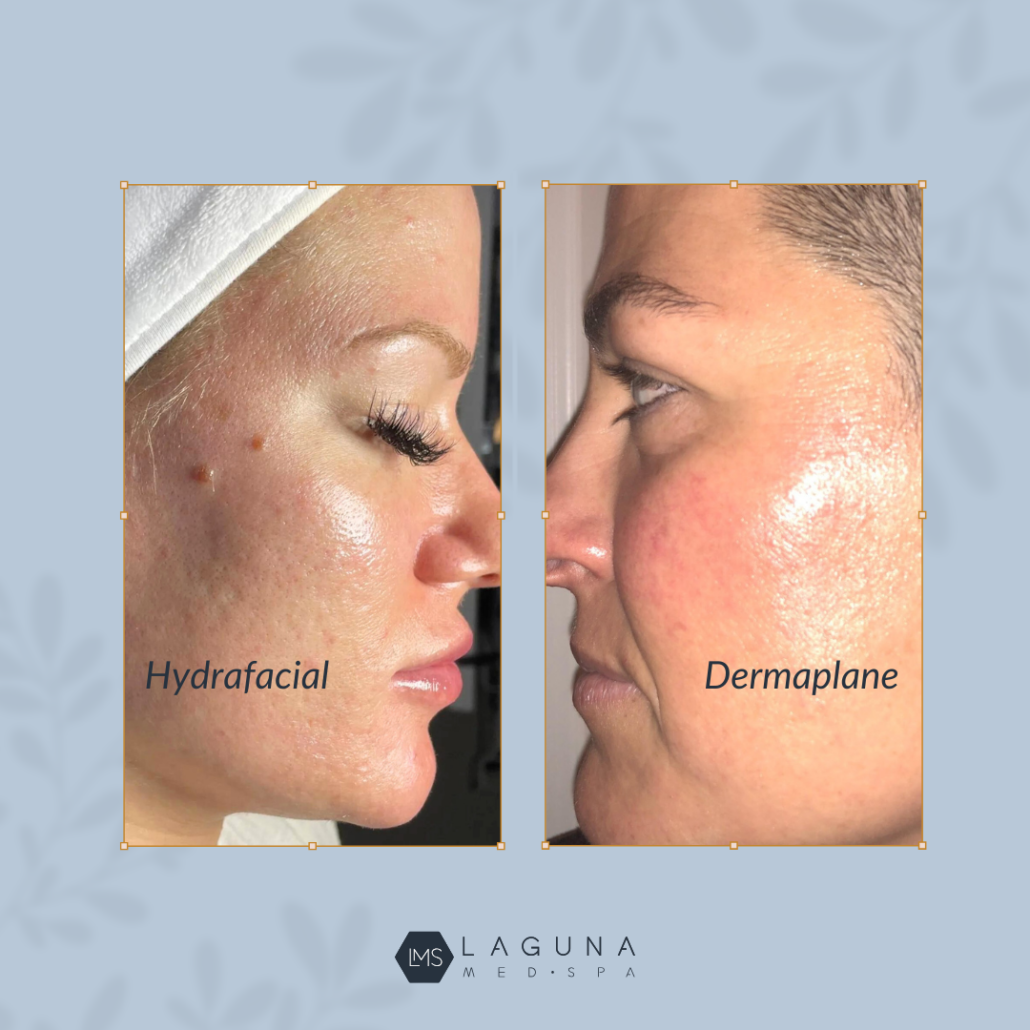
Dermaplaning gives you an instant smooth, glowing surface by physically removing what is sitting on top of your skin. HydraFacial works from the inside out, cleaning your pores and flooding your skin with hydration and nutrients it cannot get from products alone.
Neither one is the wrong choice. But the right choice depends on whether your skin needs a reset on the surface, a deep clean underneath, or both.
What dermaplaning does
Dermaplaning is a manual exfoliation technique. Your provider uses a sterile, surgical-grade blade held at a 45-degree angle to gently scrape the surface of your skin. The blade removes two things simultaneously: the outermost layer of dead skin cells and vellus hair, commonly known as peach fuzz.
The result is immediately obvious. Your skin feels noticeably smoother. Makeup applies differently, almost like it is gliding on rather than sitting on top. And because that layer of dead cells and fine hair is gone, your skincare products absorb more effectively. Some estimates suggest product penetration improves by 50 to 70% after a dermaplaning treatment in Parker, CO.
The treatment itself takes about 30 minutes and involves no suction, no chemicals, and no devices. Just a blade and a skilled hand. There is no downtime afterward. You can put on makeup and go about your day.
One thing worth noting: the peach fuzz will grow back at exactly the same rate and texture as before. It will not come back thicker or darker. That is a persistent myth that keeps people from trying dermaplaning, but it has no basis in how vellus hair actually works. The blade cuts hair at the surface, not at the follicle, so the growth pattern stays exactly the same.
What dermaplaning does not do is clean out your pores, address congestion, or deliver any active ingredients into your skin. It is purely a surface treatment. An effective one, but surface-level all the same.
What HydraFacial does
HydraFacial is a multi-step treatment that combines cleansing, exfoliation, extraction, and hydration into a single session using patented Vortex-Fusion technology. It is not a traditional facial. The device does the work rather than your provider’s hands alone, which allows for a more consistent and deeper treatment.
The process moves through three stages. First, the skin is cleansed and gently exfoliated with a mild peel solution. Then, a vacuum-like suction extracts debris from your pores painlessly, without the manual squeezing you would experience in a standard facial. Finally, the device infuses the skin with a cocktail of hydrating serums, antioxidants, and peptides tailored to your specific concerns.
A 12-week study published in the Journal of Clinical and Aesthetic Dermatology found that a series of HydraFacial clarifying treatments produced clearer, less inflamed skin in every single participant, with both investigators and patients reporting significant improvement in overall skin appearance (source).
Unlike dermaplaning, HydraFacial in Parker is an active treatment. It does not just remove what is on the surface. It cleans out what is underneath and then puts something beneficial back in.
At Laguna Med Spa, HydraFacial comes in several tiers. The Deluxe treatment includes a customized booster and LED light therapy. The Platinum adds lymphatic drainage and extended LED time for patients dealing with puffiness or inflammation. And the Clarifying option focuses specifically on acne-prone skin with targeted extractions and blue LED to reduce breakout activity.
Side-by-side comparison
| Dermaplaning | HydraFacial | |
| Method | Manual blade exfoliation | Device-based cleanse, extract, hydrate |
| Primary benefit | Surface exfoliation + peach fuzz removal | Deep pore cleansing + hydration |
| Pore extraction | No | Yes (painless suction) |
| Active ingredient delivery | No | Yes (serums, antioxidants, peptides) |
| Peach fuzz removal | Yes | No |
| Treatment time | About 30 minutes | 30 to 45 minutes |
| Downtime | None | None |
| Results last | 3 to 4 weeks | 5 to 7 days (glow), longer with series |
| Good for acne-prone skin | Not recommended during active breakouts | Yes (clarifying option available) |
The real question is what your skin needs right now
If your main frustration is dull, rough texture and you hate how your makeup sits on your face, dermaplaning is the more direct answer. It physically removes the barrier that makes your skin look flat and tired. The peach fuzz removal alone can make a dramatic difference in how foundation blends and how light reflects off your skin.
If your concerns run deeper, like congested pores, dehydration, uneven tone, or early signs of aging, HydraFacial addresses those problems at a level that dermaplaning cannot. The extraction component pulls debris from your pores that surface exfoliation does not touch, and the serum infusion delivers hydration and antioxidant protection directly into the skin.
There is also the acne factor. If you have active breakouts, dermaplaning is typically not recommended because dragging a blade across inflamed skin can spread bacteria and worsen the situation. HydraFacial, on the other hand, has a clarifying treatment option specifically designed for acne-prone skin, and the suction-based extraction avoids the bacterial transfer risk that comes with manual methods.
Why not both
Here is where it gets interesting. Dermaplaning and HydraFacial are not competing treatments. They complement each other remarkably well, and many patients at Laguna Med Spa get both done in the same visit.
The logic is simple. Dermaplaning removes the dead cell layer and peach fuzz first. Then, when HydraFacial delivers its serums, those active ingredients have a clear path into the skin with no barrier in the way. The hydrating and antioxidant serums penetrate deeper and work more effectively because dermaplaning has already done the prep work.
| Pro tip:
If you are going to combine both treatments, dermaplaning should always come first. Exfoliate the surface, then cleanse and hydrate the deeper layers. This sequencing maximizes the benefit of every serum applied during the HydraFacial step. |
How often to schedule each treatment
Dermaplaning results last about three to four weeks, which is roughly how long it takes for a new layer of dead skin cells and vellus hair to accumulate. Monthly sessions are the sweet spot for most patients who want to maintain that smooth, luminous finish consistently.
HydraFacial timing depends on your goals. For general maintenance and healthy skin upkeep, once a month works well. For patients addressing specific concerns like congestion, dullness, or early aging, a series of treatments spaced two weeks apart can deliver more dramatic results. After the initial series, monthly maintenance keeps the skin balanced and hydrated.
Seasonal adjustments matter, too. Many of our Parker clients increase their HydraFacial frequency during winter when indoor heating and cold dry air strip moisture from the skin faster than their home routine can replenish it. In summer, dermaplaning frequency stays consistent, but the HydraFacial serum selection may shift toward antioxidant and UV-recovery boosters that help repair daily sun exposure.
Both treatments fit well into a broader skincare plan. Patients who are also doing Morpheus8 RF microneedling or chemical peels in Parker often use HydraFacial and dermaplaning as in-between maintenance to keep their skin healthy and hydrated between more intensive sessions.
What about sensitive skin
Dermaplaning is safe for most skin types, but it is not recommended for patients with active acne, rosacea flares, or highly reactive skin conditions. The blade can aggravate inflamed or sensitized skin and potentially cause micro-tears in compromised areas.
HydraFacial is generally gentler on sensitive skin because the device controls the intensity, and the serums can be customized to avoid irritation. The suction-based extraction is also less aggressive than manual extraction, making it a better option for patients whose skin reacts strongly to traditional facials. If you are unsure which skin treatment is appropriate for your skin type, a consultation helps sort that out quickly.
Building a routine around these treatments
- For general maintenance and glow: Monthly dermaplaning keeps the surface fresh. Add a HydraFacial every four to six weeks for deeper hydration and pore maintenance. This is a solid baseline for patients with healthy skin who want to stay ahead of dullness and dehydration.
- For targeted skin concerns: Start with a HydraFacial series to address congestion, uneven tone, or dehydration. Once your skin is in a better baseline state, incorporate dermaplaning as a regular add-on to maintain the results between sessions. Layer in treatments like IPL photofacials for pigmentation or CoolPeel CO2 laser for sun damage as needed.
Laguna Med Spa offers membership plans that include discounts on HydraFacials and complimentary dermaplaning at the Elite level, making it easier to build a consistent routine without the cost adding up session after session.
The bottom line
The fastest way to figure it out is to sit down with a provider who can look at your skin, ask the right questions, and point you toward the treatment that will actually move the needle. Book a consultation at Laguna Med Spa and let our team in Parker help you build a plan that makes sense for your skin and your goals.